

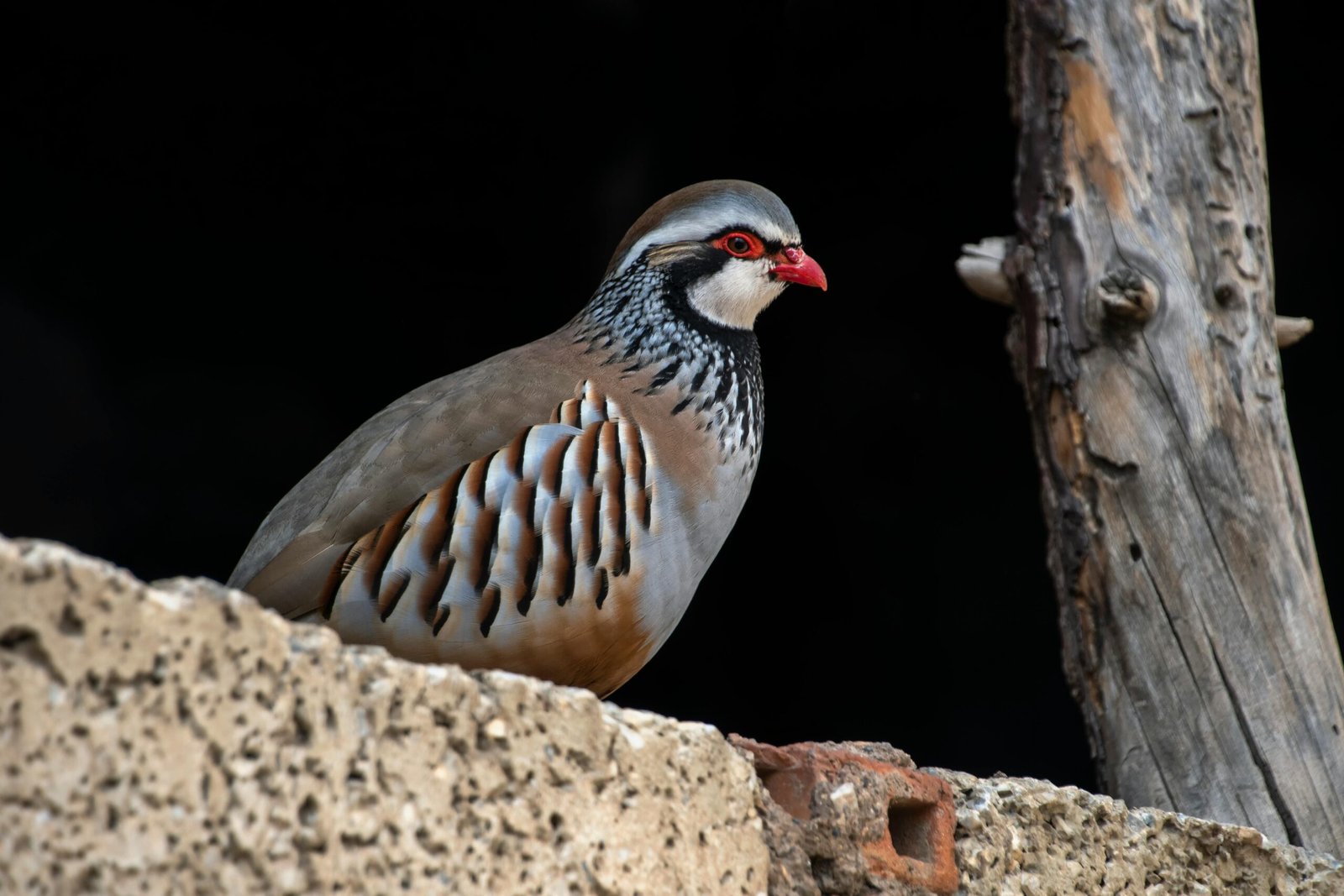
For most of us, the word “partridge” conjures up one very specific, and let’s be honest, rather peculiar image: a single bird sitting in a pear tree. This festive vision, gifted to us by the classic “Twelve Days of Christmas” carol, is where our knowledge often begins and ends. I remember as a child, I pictured a brightly colored, almost cartoonish bird, happily perched on a branch heavy with fruit. It was only years later, while walking through a hedgerow in the English countryside, that I saw a real partridge. It wasn’t in a tree. It was on the ground, and it exploded into flight from almost under my feet with a frantic whirring of wings that made my heart jump into my throat. It was a moment of pure, wild surprise, and it was nothing like the carol.
That experience sparked a curiosity in me. I wanted to know more about this bird that was so famous in song and yet so unknown in life. What I discovered was a creature far more interesting and resilient than the passive pear-tree occupant of the carol. The real partridge is a master of camouflage, a symbol of the wild landscapes it inhabits, and a bird with a rich story that stretches far beyond the Christmas season. So, let’s leave the pear tree behind for a moment and step into the real world of the partridge.
What is a Partridge, Really?
At its simplest, a partridge is a medium-sized game bird. When scientists classify it, they place it in the order Galliformes, which is a fancy way of saying it’s a cousin to chickens, turkeys, quails, and pheasants. Think of it as part of the robust, ground-loving branch of the bird family tree. Unlike songbirds that are built for melody or birds of prey built for hunting, partridges are built for survival on the ground. They have plump, rounded bodies, strong legs for scratching and running, and relatively short, rounded wings that are perfect for quick, explosive bursts of flight to escape danger.
Partridges are found across the globe, but they are particularly associated with the landscapes of Europe, Asia, Africa, and the Middle East. It’s important to know that “partridge” isn’t the name of just one single species. It’s a common name that covers several different species within a few related genera. For example, the Grey Partridge (scientific name Perdix perdix) is a classic bird of the European farmland, while the Red-legged Partridge (Alectoris rufa) is native to southwestern Europe. The Chukar Partridge (Alectoris chukar), with its striking black band across the eyes, is a bird of rocky, arid slopes from Israel to India, and has been introduced in places like North America for hunting. So, when we talk about partridges, we are talking about a diverse family of birds, each adapted to its own specific part of the world.
A Closer Look: The Master of Disguise
If I had to pick one word to describe a partridge’s appearance, it would be “camouflage.” These birds are not designed to be flashy. They are designed to disappear. Let’s take the Grey Partridge as our prime example. At first glance, you might think it’s a bit, well, grey and boring. But if you look closer, you’ll see a beautifully intricate pattern of browns, tans, and soft greys, with fine black speckles and bars across its back and wings. This mottled effect breaks up its outline perfectly against a background of ploughed earth, dead grass, and undergrowth. It’s like wearing a custom-made invisibility cloak.
Their belly is usually a much lighter color, often a pale buff or white, and they frequently have a distinctive dark, horseshoe-shaped mark on their lower breast. This is a key identifier for the Grey Partridge. The Red-legged Partridge, true to its name, has bright coral-red legs and beak. Its plumage is more boldly patterned, with a grey breast, a streaky brown back, and a face that is white with a black line running through the eye, almost like a bandit’s mask. Both species are about the size of a small chicken, but with a more compact and streamlined shape. They typically measure around 12 to 14 inches long. Their heads are small and neat, and they have a quiet, watchful expression that speaks of a life spent being constantly alert.
The Sound of the Field: Partridge Calls and Communication
You are more likely to hear a partridge than see one. Their calls are the sounds of the open landscapes they call home. I once spent a quiet evening sitting at the edge of a field, and I heard a strange, rasping, rhythmic call: kirr-ic, kirr-ic. It was a Grey Partridge, a sound often described as a creaky gate. It wasn’t a beautiful song, but it was full of character, a rusty, ancient sound that felt like it belonged to the land itself.
Partridges use a variety of calls to communicate. They have contact calls to keep the family group, or covey, together while they are foraging. They have soft, clucking sounds of contentment. But the most important call is the alarm call. When a predator like a fox or a hawk is spotted, the call changes to a sharp, loud, and repetitive note that sends the entire covey scattering for cover or bursting into flight. The Chukar Partridge is famous for its loud, chuckling call, from which it gets its name: chuk-chuk-chukar-chukar! Learning to recognize these sounds opens up a new layer of understanding when you are out in nature; you can start to picture the secret drama of survival playing out just beyond the hedge.
Home on the Range: Where Partridges Live
Forget the pear tree. The partridge is a bird of the ground. Its home is a mosaic of habitats that provide it with everything it needs: food, cover, and a place to nest. The classic Grey Partridge is a bird of lowland farmland. It thrives in what is often called “mixed agriculture.” This means a combination of crop fields for food and weedy, grassy margins, hedgerows, and ditches for cover and nesting. They need dense cover to hide from predators and to shelter from bad weather. They are not deep forest birds; they prefer open spaces with plenty of edges.
The Red-legged Partridge is also found in farmland but can tolerate drier, more open habitats, including heathland and scrubby hillsides. The Chukar Partridge is the mountaineer of the family, perfectly at home on steep, rocky, and arid hillsides where few other birds of its size would choose to live. They are incredibly tough and can survive on very little water, getting most of their moisture from the seeds and insects they eat. This adaptability to different, often harsh, environments is a testament to the partridge’s resilience. However, this resilience has its limits, and changes to their traditional homelands have had a profound impact, which we will discuss later.
The Diet of a Forager: What’s on the Partridge Menu?
A partridge is not a fussy eater. Scientists call them omnivores, which means they eat both plant and animal matter. Their diet changes with the seasons, which is a clever way to make the most of what’s available. In the spring and summer, when insects are plentiful, their diet is rich in protein. They will eagerly eat beetles, caterpillars, ants, and all manner of small creepy-crawlies. This is especially important for their growing chicks, who need a high-protein diet to develop quickly.
As summer turns to autumn and winter, the insect population declines. The partridges then switch to a menu made up mostly of seeds, grains, and green leaves. They use their strong feet to scratch at the soil, uncovering spilled wheat, barley, or seeds from wild plants like clover, plantain, and knotgrass. They will also eat various berries when they can find them. Watching a covey of partridges forage is a lovely sight. They move methodically through the stubble of a harvested field, heads bobbing, constantly pecking and scratching, communicating with soft calls. It’s a peaceful, communal activity that has been going on for millennia.
A Social Life: The Importance of the Covey
Partridges are family birds. For most of the year, they live in small groups known as coveys. A covey is usually an extended family unit, often consisting of an adult pair and their offspring from that year. Living in a group provides safety. A dozen pairs of eyes and ears are much better at spotting a prowling fox or a circling hawk than just one pair. When danger approaches, the first bird to see it gives the alarm call, and the whole covey can react instantly, either freezing and relying on their camouflage or exploding into flight in a noisy, confusing flurry that can startle a predator.
At night, the covey does something wonderful. They huddle together on the ground in a tight circle, all facing outward. This shared body warmth helps them conserve heat during cold nights, and it means that every bird is watching a different direction, ready to sound the alarm. This social structure is fundamental to their survival. In the late winter, as the breeding season approaches, the coveys will begin to break up. The pairs will form and become more territorial, chasing off other partridges as they prepare to nest and raise a new family, starting the cycle all over again.
The Circle of Life: From Nest to Flight
The nesting season for partridges is a tense and dangerous time. The female is solely responsible for building the nest, which is a remarkably simple affair. She will find a well-hidden spot in a dense clump of grass, at the base of a hedge, or in a thick field margin. There, she scrapes a shallow hollow in the ground and lines it with a few bits of grass and leaves. It’s not a fancy structure, but its simplicity is part of its camouflage. A big, obvious nest would be a beacon for predators.
She will lay a surprisingly large clutch of eggs, often between 10 and 20. The eggs are olive-brown and perfectly camouflaged against the soil. She incubates them alone for about 23 to 25 days, leaving only briefly to feed. During this time, she is incredibly vulnerable. If a predator finds her, she will sit tight until the very last second, relying on her camouflage, and then burst away, sometimes feigning injury to lead the threat away from the nest.
The chicks, known as keets, are precocial. This means that from the moment they hatch, they are covered in fluffy down, their eyes are open, and they are ready to leave the nest within hours. They can’t fly yet, but they can run remarkably well. I was lucky enough to once see a partridge family, and it was a heartwarming sight. The mother moved slowly through the grass, clucking softly, followed by a line of perhaps a dozen tiny, perfectly miniature chicks, each no bigger than a bumblebee, pecking diligently at tiny insects. The father often stays nearby, helping to guard the family. The chicks grow at an incredible rate, and within two weeks, they can make short flights. This rapid development is crucial for surviving in a world full of threats.
Partridges and People: A Deep-Rooted Connection
The relationship between partridges and humans is long and complex. For centuries, the partridge has been a prized game bird. Its swift, challenging flight and the fact that it lives in open country make it a classic target for upland bird hunters. The meat is dark, lean, and has a rich, gamey flavor that is highly valued. In many places, careful management of partridge populations is part of the rural economy and tradition. Hunting can be a conservation tool when done responsibly, as the revenue and interest can fund habitat management projects.
This brings us, of course, to the famous Christmas carol, “The Twelve Days of Christmas.” The “partridge in a pear tree” is the first and most enduring gift. The origins of this symbol are debated. Some historians suggest the partridge represents Jesus Christ, and the pear tree represents the cross, with the bird’s willingness to sacrifice itself to protect its young being a metaphor for Christ’s sacrifice. Others see it as a simple, festive image. Regardless of its origin, the carol has forever linked this humble ground bird with the joy and generosity of the Christmas season, even if the biology of a partridge in a tree is a little fanciful.
A Bird in Trouble: The Conservation Story
Here is where the story takes a sobering turn. For all their toughness and adaptability, many partridge species are in serious decline. The Grey Partridge, in particular, is a bird that has seen a catastrophic drop in numbers across much of its range, especially in the UK. This is not a natural population cycle; this is a direct result of human activity.
The intensification of farming since the mid-20th century has been the single biggest factor. The removal of hedgerows to create enormous, open fields has destroyed the vital cover and “corridors” that partridges need. The use of powerful herbicides has wiped out the broad-leaved plants and “weeds” that produce the seeds they rely on for winter food. Insecticides have decimated the populations of insects that are absolutely essential for their chicks’ survival. Modern farming is simply too clean and efficient for the partridge to coexist. It’s a story that is repeated for many farmland birds, but the partridge, as an icon of that landscape, stands as a powerful symbol of what we have lost.
What Can We Do? Hope for the Future
The situation may seem bleak, but it is not hopeless. Across Europe and North America, there are fantastic conservation projects dedicated to bringing the partridge back. Organizations like the Game & Wildlife Conservation Trust in the UK have done pioneering work, showing that with simple, targeted interventions, partridge populations can recover.
What does this work involve? It’s about putting the “mess” back into the countryside, but in a controlled way. Farmers can be encouraged and supported to create “conservation headlands” around the edges of their fields, where they don’t use pesticides, allowing the wildflowers and insects to thrive. Planting wild bird cover, strips of land sown with seed-bearing plants like quinoa and millet, provides a lifeline of winter food. Maintaining and planting new hedgerows recreates the vital cover they need. It’s about working with the land, not just dominating it.
Even if you are not a farmer, you can help. You can support the organizations that are doing this vital work through donations or membership. You can choose to buy food from farms that use wildlife-friendly practices. And most importantly, you can learn about birds like the partridge and share that knowledge. The first step to conserving something is to care about it, and to care about it, you have to know it exists. By looking past the Christmas carol and seeing the real, remarkable bird, you are already playing a part in its story.
Conclusion
The partridge is so much more than a lyric in a festive song. It is a master of camouflage, a resilient survivor of some of the world’s harshest landscapes, and a devoted parent. Its story is woven into the fabric of our rural heritage, from the farmlands of Europe to the rocky hills of the Middle East. But its story is also a cautionary tale, a clear indicator of the health of our countryside. The drastic decline of the Grey Partridge is a silent alarm bell ringing from our fields.
Yet, in its tough, ground-hugging nature, there is also a message of hope. It shows us that when we understand the needs of a species and make a conscious effort to share our landscape with them, recovery is possible. The partridge doesn’t need much: just a little cover, a few insects, and some seeds for the winter. By making small changes to how we manage our land, we can ensure that the whirring flight of a covey of partridges remains a thrilling sight for generations to come. The next time you hear “partridge in a pear tree,” I hope you’ll think of the real bird, a symbol of the wild, enduring spirit of the land itself.
FAQ Section
Q1: Is a partridge the same as a quail?
No, they are different, though they are related. Partridges are generally larger, have stronger social family groups (coveys), and are native to Europe, Asia, and Africa. Quails are smaller, have more musical calls, and include species that undertake incredible long-distance migrations.
Q2: Why is a partridge in a pear tree in the Christmas song? It seems odd.
It is a bit odd, as partridges are ground birds! The meaning is likely symbolic rather than literal. Some interpretations suggest the partridge, known for feigning injury to protect its young, represents Jesus Christ, and the pear tree represents the cross.
Q3: Can you eat partridge, and what does it taste like?
Yes, partridge has been a popular game bird for centuries. The meat is dark, lean, and has a rich, slightly gamey flavor that is often compared to pheasant but is generally more tender. It’s considered a delicacy.
Q4: What is a group of partridges called?
A group of partridges is called a “covey.” A covey is usually a family unit that stays together for most of the year for protection and warmth.
Q5: How can I help partridges if I live in a city?
You can support conservation charities that work directly with farmers to create partridge-friendly habitats. Spreading awareness about the bird and its plight is also a powerful way to help. If you have a garden, making it wildlife-friendly with native plants helps all insects, which are a crucial part of the partridge chick’s diet in rural areas.


