

When you hear the name Harland and Wolff, one image comes to mind almost instantly — the majestic RMS Titanic, the ill-fated ocean liner that became both a marvel and a tragedy of the 20th century. But Harland and Wolff’s story stretches far beyond the Titanic. It’s the story of human ingenuity, industrial pride, and the rise and transformation of Belfast as a global shipbuilding powerhouse.
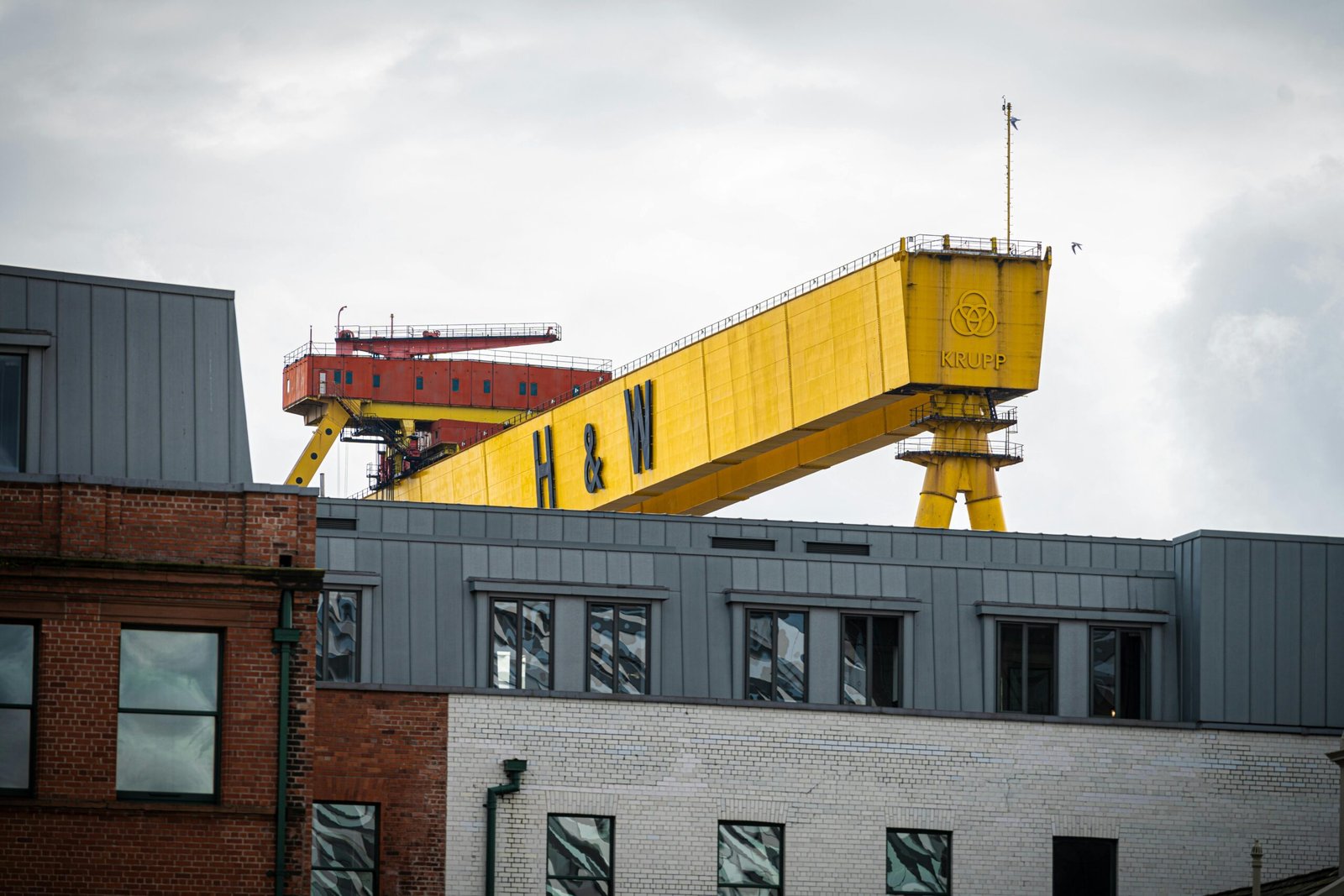
Growing up fascinated by engineering, I always saw Harland and Wolff as more than just a company — it was a symbol of ambition and craftsmanship. Its massive yellow cranes, Samson and Goliath, dominate Belfast’s skyline, serving as proud reminders of an industry that shaped not only ships but also communities and generations of workers.
The Origins of Harland and Wolff
The Harland and Wolff story began in 1861, when Edward James Harland, a young engineer from Scarborough, teamed up with Gustav Wilhelm Wolff, a German-born businessman. Together, they founded a shipbuilding company in Belfast that would go on to define the city’s industrial future.
Their partnership combined Harland’s technical expertise and Wolff’s financial acumen. From the start, they aimed to innovate. They focused on quality, durability, and innovation — building vessels that stood out for their design and performance.
In the late 19th century, Belfast’s shipyard became a hub of industrial activity. Thousands of workers poured in from across Ireland to work on projects that would sail across the world’s oceans. The combination of skilled labor, clever design, and strong management made Harland and Wolff the heart of British shipbuilding.
The company’s early contracts with the White Star Line laid the foundation for a legendary collaboration that would produce some of the most famous ships in history.
Building Giants: The Titanic Era
The early 1900s were Harland and Wolff’s golden years. The company was known for building some of the largest and most luxurious ocean liners of its time — and none was more famous than the RMS Titanic.
Commissioned by the White Star Line, Titanic was built alongside her sister ships, Olympic and Britannic, in Harland and Wolff’s massive Belfast shipyard. The construction involved around 15,000 workers and pushed the boundaries of engineering.
The ship’s hull, made of steel plates and riveted by hand, represented a level of craftsmanship rarely seen today. Harland and Wolff’s engineers introduced new design methods and safety features that were revolutionary at the time, even if history would later test them tragically.
When Titanic was launched in 1911, Belfast celebrated with pride. The ship was not just a vessel — it was proof of human progress. Though the disaster of 1912 cast a long shadow, it didn’t erase Harland and Wolff’s reputation for excellence. Instead, it deepened respect for the skill and dedication of its workers, who poured their lives into their craft.
Even today, when you visit the Titanic Quarter in Belfast, you can sense the spirit of that era. The shipyard’s cranes still stand tall, and the dry dock where Titanic was fitted out remains a silent monument to one of history’s most famous ships.
The Famous Cranes – Samson and Goliath
No discussion about Harland and Wolff is complete without mentioning Samson and Goliath, the two massive gantry cranes that dominate Belfast’s skyline. Built in the 1960s and 1970s, they became symbols of the city’s industrial pride.
Standing 96 meters (Goliath) and 106 meters (Samson) high, they were designed to handle the heaviest ship components during the construction process. Their bright yellow color and massive scale make them visible from miles away — a constant reminder of Belfast’s industrial heritage.
For many locals, the cranes are more than machines; they’re landmarks filled with memories. Generations grew up seeing them every day, and they’ve become part of Belfast’s identity, appearing in postcards, art, and local stories.
The Workforce and Community
At its peak, Harland and Wolff employed over 30,000 workers, making it one of the largest employers in Northern Ireland. The shipyard wasn’t just a workplace — it was a way of life.
Families often worked there for generations. Fathers taught sons how to handle tools, weld, and craft steel into ships that would sail the globe. The pride in workmanship ran deep. Even outside the shipyard, Belfast’s economy, schools, and local shops revolved around the rhythm of Harland and Wolff’s schedule.
The work was tough and often dangerous. Many laborers worked long hours in harsh conditions. Yet, the sense of camaraderie and purpose made it worthwhile. As one former worker once said, “When you worked at Harland and Wolff, you didn’t just build ships — you built history.”
Challenges and Decline in Shipbuilding
The mid-20th century brought dramatic change. After World War II, the global shipbuilding industry began to shift. Countries like Japan and South Korea invested heavily in modern, automated shipyards, while British yards, including Harland and Wolff, struggled with outdated methods and high costs.
By the 1970s and 1980s, ship orders had declined sharply. Many of Harland and Wolff’s docks went quiet, and the once-bustling workforce shrank. Political unrest in Northern Ireland during the Troubles added further strain.
In 1989, the company was privatized, and much of its original shipbuilding work ended. For many in Belfast, it felt like the end of an era. The silence of the docks was more than economic loss — it was emotional. The cranes stood still, watching over empty yards that had once built giants.
Revival and Modern Transformation
Yet, the Harland and Wolff story didn’t end there. In the 21st century, the company found new life. It reinvented itself from a traditional shipbuilder into a modern engineering and energy firm.
Today, Harland and Wolff focuses on ship repair, offshore energy, and marine engineering projects. It works on wind turbine structures, ferries, and naval vessels. This shift reflects the company’s resilience — the same innovative spirit that built the Titanic now drives its involvement in renewable energy and defense contracts.
In recent years, Harland and Wolff’s name has reappeared in the headlines as it secured new contracts, expanded to other sites in the UK, and continued to play a key role in maritime innovation.
Harland and Wolff in Renewable Energy
One of the most inspiring parts of Harland and Wolff’s modern story is its work in renewable energy. The company now plays a major role in constructing and maintaining offshore wind farms, helping the UK transition to greener energy sources.
By reusing its massive docks and cranes, Harland and Wolff has adapted to new technology while keeping its heritage alive. The workers now design and assemble renewable structures rather than ocean liners, but the precision, pride, and craftsmanship remain the same.
This transformation shows how old industries can evolve rather than vanish. It’s a reminder that innovation is not about forgetting the past — it’s about building on it.
The Symbolism of Harland and Wolff in Belfast
To the people of Belfast, Harland and Wolff represents identity and resilience. The cranes, the shipyard, and the workers’ legacy are woven into the city’s soul.
If you walk through Belfast today, you’ll see how the old shipyard has been reborn. The Titanic Quarter is now a thriving area with museums, offices, hotels, and homes. The Titanic Belfast museum tells the story of the ship, the workers, and the city that built her.
Yet, even with modernization, there’s deep respect for the past. Locals still refer to the cranes with affection. They’ve become symbols of hope, pride, and endurance — proof that Belfast can face hard times and emerge stronger.
Personal Reflections on Visiting Harland and Wolff
When I first stood beneath Samson and Goliath, I felt small — not in a bad way, but in awe. The sheer size of the cranes made me think about the generations of workers who once stood there, welding, hammering, and shaping steel.
You can almost feel the echoes of history in the air. The sound of tools, the laughter of workers, the pride of completion. Visiting the shipyard today is emotional because it connects you to something bigger than yourself — a story of human effort, community, and endurance.
Belfast has changed, but its heart still beats in those docks.
Conclusion – A Legacy That Continues to Inspire
Harland and Wolff’s journey mirrors the evolution of industry itself — from iron and steam to renewable energy and innovation. It began with two ambitious men in 1861 and grew into a company that built some of the world’s most iconic ships.
While the Titanic may forever be the name most associated with Harland and Wolff, its true legacy lies in its resilience. It has faced wars, economic crises, and industrial decline, yet continues to adapt and contribute to the future.
In many ways, Harland and Wolff stands as a metaphor for Belfast itself: strong, proud, and determined to keep building — no matter how the tides change.
FAQs
1. When was Harland and Wolff founded?
Harland and Wolff was founded in 1861 in Belfast by Edward Harland and Gustav Wolff.
2. What is Harland and Wolff most famous for?
It is best known for building the RMS Titanic and other ocean liners for the White Star Line.
3. Is Harland and Wolff still in operation today?
Yes, it operates as a modern engineering and energy company, focusing on ship repair, defense, and renewable energy projects.
4. What do the cranes Samson and Goliath represent?
They symbolize Belfast’s industrial heritage and the enduring spirit of its shipbuilders.
5. Can visitors tour the shipyard?
While the working areas are restricted, the nearby Titanic Quarter and museum offer an immersive experience of the shipyard’s history.


