

Hydrochloric acid is one of those substances that people often hear about but don’t really understand. To many, it sounds like a dangerous chemical only used in labs, but the truth is, hydrochloric acid plays a huge role in our daily lives — even inside our own bodies.
When I first handled hydrochloric acid during my chemistry lab sessions, I was both fascinated and cautious. The strong smell and the way it reacted with certain materials immediately showed its power. Yet, what I learned over time is that hydrochloric acid isn’t just about strength — it’s about balance, precision, and purpose.
In this article, I’ll walk you through everything you need to know about hydrochloric acid — from its chemistry to its practical uses, safety rules, and its presence inside our stomachs. Let’s begin with the basics.
What Is Hydrochloric Acid?
Hydrochloric acid is a strong, corrosive acid that consists of hydrogen and chlorine atoms. In chemistry, it’s often represented by the formula HCl, meaning one atom of hydrogen (H) combined with one atom of chlorine (Cl).
In its pure form, hydrochloric acid is a colorless liquid with a sharp, pungent smell. It’s also highly soluble in water, which means it mixes easily without leaving residues. When dissolved in water, it forms an acidic solution that has a very low pH value — usually between 1 and 2, depending on its concentration.
Though the name might sound intimidating, hydrochloric acid is not just a lab chemical. It’s used in cleaning products, industrial processes, and even inside our digestive systems.
The Chemical Formula and Structure
The chemical formula of hydrochloric acid is HCl. It’s one of the simplest acids in chemistry, but its behavior is quite fascinating.
In gaseous form, it exists as hydrogen chloride gas. When this gas dissolves in water, it produces hydrochloric acid. The process can be written as:
HCl (g) → H⁺ (aq) + Cl⁻ (aq)
This means the molecule splits into hydrogen ions (which make the solution acidic) and chloride ions (which are stable in water).
This simple structure makes hydrochloric acid a strong monoprotic acid, meaning it can easily donate one hydrogen ion to a base in a reaction.
How Hydrochloric Acid Is Made
Industrially, hydrochloric acid is produced through the reaction of hydrogen gas and chlorine gas:
H₂ + Cl₂ → 2HCl
This reaction releases heat and forms hydrogen chloride gas, which is then absorbed in water to make the acid.
In laboratories, it can also be prepared by reacting sodium chloride (table salt) with sulfuric acid:
NaCl + H₂SO₄ → HCl + NaHSO₄
It’s interesting how something as common as table salt can be used to create a powerful acid. This simple connection between household items and industrial chemicals shows how chemistry is deeply rooted in everyday life.
Physical and Chemical Properties
Hydrochloric acid is a clear, colorless liquid with a strong, irritating odor. It’s highly corrosive and can dissolve metals such as zinc and iron.
Some key properties include:
-
Molecular formula: HCl
-
Molar mass: 36.46 g/mol
-
Appearance: Colorless, fuming liquid
-
Boiling point: Around 110°C (depending on concentration)
-
pH: 1–2 (strongly acidic)
-
Solubility: Completely soluble in water
Chemically, it reacts vigorously with bases to form salts and water — a process known as neutralization. It also reacts with carbonates to produce carbon dioxide gas.
One of the classic school experiments that show this is when hydrochloric acid is added to marble chips (calcium carbonate). It starts fizzing, releasing carbon dioxide.
Common Uses in Everyday Life
You might be surprised to know how often hydrochloric acid touches our lives. In diluted form, it’s used in household cleaning products, especially for removing stains, rust, and limescale.
In swimming pools, it helps maintain the correct pH balance of the water. In food processing, it’s used to make certain additives and to adjust acidity.
Hospitals and clinics use it in medical testing and sterilization processes. Even though it’s a strong chemical, when handled properly, it’s extremely useful and effective.
Industrial Applications of Hydrochloric Acid
In industry, hydrochloric acid is everywhere. It’s used in:
-
Steel production: To remove rust and impurities from metal surfaces (a process known as pickling).
-
Oil production: For acidizing oil wells to improve flow.
-
Food industry: For making gelatin and processing starch.
-
Pharmaceuticals: For adjusting pH and producing active ingredients.
-
Plastics: Especially for producing polyvinyl chloride (PVC).
Every time you see shiny steel, or a smooth plastic surface, there’s a chance hydrochloric acid played a role somewhere in the process.
Hydrochloric Acid in the Human Body
Here’s where it gets truly amazing — hydrochloric acid isn’t just found in factories; it’s also inside your stomach.
Your stomach naturally produces hydrochloric acid as part of the gastric juice that helps break down food. This acid kills bacteria and helps enzymes digest proteins.
When the acid levels are too low, digestion becomes difficult. When they’re too high, it can lead to heartburn or ulcers. This balance shows just how powerful and delicate nature can be.
I remember learning this in school and being astonished — the same acid used in industrial cleaning exists naturally in our bodies, working silently to keep us alive and healthy.
Hydrochloric Acid in Laboratories
In the lab, hydrochloric acid is one of the most commonly used reagents. It’s used to clean glassware, prepare samples, and conduct titrations.
For example, in acid-base titration experiments, hydrochloric acid is used as a standard strong acid to determine the concentration of a base.
When I first performed this experiment, the process of slowly adding acid to a base while watching the color change felt almost magical — it was science in its purest, most satisfying form.
Hydrochloric Acid Reactions and Examples
Hydrochloric acid is highly reactive. Here are a few key reactions:
-
With metals:
Zn + 2HCl → ZnCl₂ + H₂ (Hydrogen gas released) -
With bases:
NaOH + HCl → NaCl + H₂O (Neutralization) -
With carbonates:
CaCO₃ + 2HCl → CaCl₂ + CO₂ + H₂O (Fizzing reaction producing CO₂)
These reactions are the foundation of chemistry and are taught in almost every classroom.
Safety Measures and Precautions
Handling hydrochloric acid requires care and respect. It can cause severe burns if it touches the skin or eyes and should never be inhaled.
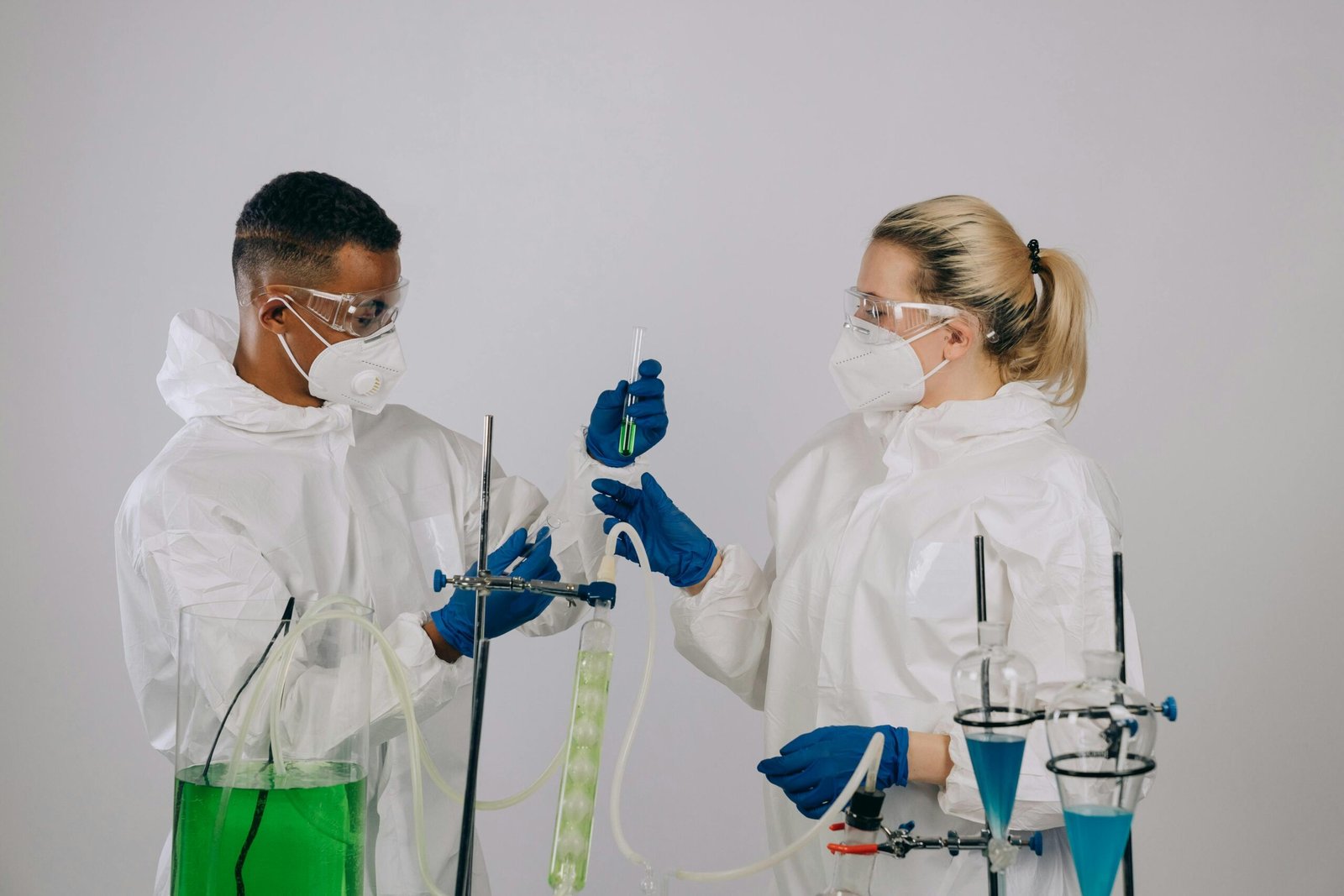
Always wear gloves, goggles, and a lab coat when using it. Work in a well-ventilated area or under a fume hood. If any spills occur, neutralize them using baking soda (sodium bicarbonate) before cleaning.
In case of accidental contact, wash the affected area immediately with plenty of water.
Storage and Handling Guidelines
Hydrochloric acid should be stored in tightly sealed containers made of plastic or glass, away from heat and direct sunlight. It must not be kept near metals, oxidizing agents, or bases.
Label the containers clearly and keep them in a secure area. Regularly inspect for leaks or damage. These small steps go a long way in preventing accidents.
Environmental Impact and Disposal
While hydrochloric acid is biodegradable in small quantities, large industrial releases can harm aquatic life and corrode infrastructure.
Waste acid must be neutralized before disposal. Many industries use lime or sodium hydroxide to safely neutralize hydrochloric acid waste before releasing it into wastewater systems.
My Personal Experience Using Hydrochloric Acid
During my early chemistry training, I once had to use hydrochloric acid to clean corroded copper plates. At first, the idea of using acid made me nervous, but after following proper safety steps and watching the reaction take place, I gained a new appreciation for it.
The way it removed rust so efficiently felt like watching chemistry come alive — a reminder that when used wisely, even the strongest substances can create beauty and utility.
Importance of Hydrochloric Acid in Modern Chemistry
Hydrochloric acid is one of the cornerstones of modern chemistry. It’s a basic reagent in nearly every lab, a critical material in industry, and a natural substance in our biology.
Its versatility — from cleaning metals to helping digestion — makes it irreplaceable. Understanding hydrochloric acid is like understanding the language of chemistry itself.
Conclusion
Hydrochloric acid is more than just a chemical formula. It’s a bridge between science and daily life — powerful, dangerous if misused, but incredibly valuable when respected.
From laboratories to our own stomachs, hydrochloric acid proves that nature and science often mirror each other. It teaches us that strength, when balanced with control, leads to purpose.
FAQs
Q1. What is the formula of hydrochloric acid?
The formula is HCl, which stands for hydrogen chloride in its aqueous form.
Q2. What are the main uses of hydrochloric acid?
It’s used in cleaning, steel processing, food production, and as a digestive acid in the stomach.
Q3. Is hydrochloric acid dangerous?
Yes, if mishandled. It’s corrosive and can cause burns, but it’s safe when handled with proper protection.
Q4. Can I find hydrochloric acid at home?
Yes, in diluted form inside cleaning agents and toilet cleaners.
Q5. What happens if hydrochloric acid touches metal?
It reacts to form metal chloride and hydrogen gas, often producing bubbles or fizzing.


