

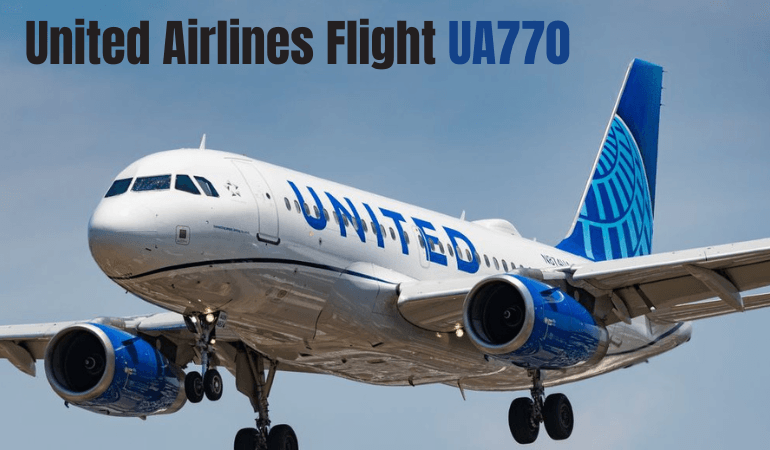
When an in-flight emergency occurs, it’s often a tense and uncertain time for everyone aboard. For passengers, crew, and airline staff, it becomes a serious test of safety systems, training, and communication. One such incident that gained attention was United airlines flight ua770 emergency diversion which was forced to divert mid-air after declaring an emergency. The flight was bound from Barcelona, Spain (BCN) to Chicago O’Hare (ORD) when a technical anomaly prompted pilots to take precautionary action. Fortunately, the diversion ended in a safe landing with no injuries reported.
In this article, we’ll look at: what’s publicly known about the UA770 diversion; what likely triggered the emergency; how the crew and airline responded; why diversions happen; and what lessons passengers and the industry take away from such events.
1. What the Reports Say: Key Facts
Based on publicly available information, here are some of the most consistent details about the incident:
-
Flight route: UA770 was scheduled from Barcelona (BCN) to Chicago O’Hare (ORD). JPost+2Dailynewstime+2
-
Aircraft model: A Boeing 787-9 Dreamliner (tail number N26902). JPost+3The Mindful Mirror+3sukitir.com+3
-
Nature of the issue: Various sources report that pilots detected an anomaly related to cabin pressurization. There was no reported decompression, and oxygen masks were not deployed. TechX+3The Tundra Drums+3sukitir.com+3
-
Emergency declaration: The flight crew declared a general emergency by setting the transponder to Squawk 7700, which signals to all air traffic control centers that the aircraft is facing a serious in-flight issue. sukitir.com+3The Mindful Mirror+3techhuda.com+3
-
Diversion airport: The aircraft diverted to London Heathrow (LHR) instead of continuing to Chicago. JPost+3The Mindful Mirror+3Dailynewstime+3
-
Landing time: Reports place the touchdown at Heathrow at about 4:55 PM BST on the date of diversion. The Mindful Mirror+2Wordle Magazine+2
-
Passenger outcome: No injuries reported. All were accounted for safely. The Tundra Drums+1
These facts form the foundation for understanding what likely happened and how the incident was managed.
2. Why Cabin Pressurization Issues Are Serious
At high altitude (generally cruising above ~30,000-35,000 feet), the aircraft cabin is pressurized to maintain a safe and comfortable environment for passengers and crew. The outside air is too thin to support human breathing properly, ears and sinuses are stressed, and unpressurized levels can cause hypoxia (lack of oxygen), disorientation, discomfort, or worse.
Because of the risks, any pressurization anomaly—even if minor—is taken very seriously. Possible triggers include:
-
Sensors detecting abnormal pressure differences
-
Failures in the pressurization control system (valves, seals)
-
Electrical or mechanical malfunctions related to the environmental control system
In the UA770 case, while no decompression or mask deployment was reported, the issue was serious enough to declare an emergency and divert the flight. This shows how pilots are trained to act with prudence whenever warning signs are shown. The Tundra Drums+2The Mindful Mirror+2
3. Why Declare “Squawk 7700”
The transponder’s “Squawk 7700” is a universal code used in aviation for general emergencies:
-
When set, ATC (Air Traffic Control) immediately knows the aircraft is in distress (not necessarily danger of crash, but facing a condition that could escalate).
-
The aircraft receives priority routing, potentially altered flight paths, clearance to land at the nearest suitable airport.
-
Emergency and rescue services on the ground are alerted to stand by.
UA770 did this, reflecting proper safety protocol rather than panic. It ensures maximum situational awareness among controllers and ground response teams. The Mindful Mirror+2techhuda.com+2
4. Why Heathrow Was Chosen as Diversion Airport
Several factors typically go into selecting a diversion airport:
-
Proximity: how far off-course the aircraft is and how quickly it can reach an alternate.
-
Facilities: whether the airport has the infrastructure to handle large aircraft and emergency services (fire, medical, maintenance).
-
Passenger welfare: ability to provide accommodations, re-routing, and support services.
-
Air Traffic Control and airline presence: familiarity with the airline, operational support.
London Heathrow is one of the busiest, best-equipped international airports in Europe, making it a logical choice for diversion. In the case of UA770, its route over European airspace and Heathrow’s capability to receive a Dreamliner and provide ground support made it the prudent choice. Dailynewstime+2JPost+2
5. How the Diversion Was Handled: Crew, Passenger, and Airline Actions
Reports from passengers and media suggest the diversion was managed well. Key observations:
-
The crew remained calm, gave announcements to keep passengers informed, which helps reduce panic. The Mindful Mirror+1
-
No oxygen mask deployment, meaning although there was a pressurization anomaly, it was not a catastrophic loss of cabin pressure. The Tundra Drums+1
-
After landing, passengers were aided with rebooking their connections, perhaps meals or accommodations, depending on their next legs. The Tundra Drums+1
-
Ground and maintenance crews carried out inspections before the aircraft was cleared to continue service. The Tundra Drums+2JPost+2
These actions reflect typical aviation safety standards: prioritize life and safety, then deal with logistics.
6. Uncertainties & What Is Still Unclear
There are several details that are still not confirmed or vary among reports:
-
Exact cause: While pressurization anomaly is widely mentioned, some sources say “technical issue” more broadly. The exact component (valve, sensor, bleed air, etc.) hasn’t been officially confirmed. sukitir.com+3JPost+3The Mindful Mirror+3
-
Precise timeline: Some discrepancies exist around times of detection, time of declaring emergency, and when landing occurred. Some reports date the event May 27, 2025, while others list different dates. sukitir.com+2The Tundra Drums+2
-
Passenger load and manifest: Sources differ on how many people were aboard. One report said about 269 (257 passengers + 12 crew) but that is not officially confirmed. The Tundra Drums+1
-
After-landing outcomes: Which repairs were needed, how long the aircraft was grounded, etc., are still under investigation.
Because of these gaps, while the broad picture is reliable, some specifics remain tentative.
7. Safety Systems & Protocols: What This Event Demonstrates
The UA770 diversion underscores how aviation is built around layered safety:
-
Monitoring & alert systems — sensors, diagnostics that detect when systems (like pressurization) are out of expected parameters.
-
Pilot training & decision-making — pilots are trained to assess risk, declare emergencies, and divert when needed. Protocols exist for controlled descent, communication with ATC, and passenger care.
-
ATC coordination — once an emergency is declared, air traffic controllers work to guide the aircraft safely, clear airspace, and prepare the diversion airport.
-
Ground & maintenance readiness — airports like Heathrow maintain emergency services and the ability to service, inspect, and repair aircraft quickly.
-
Passenger support systems — providing updates, accommodations, rebooking, etc., are integral parts of airline emergency protocol.
8. What Passengers Can Learn & How to Prepare
If you’re a traveler, incidents like UA770, while rare, highlight important lessons:
-
Lock in travel insurance or ensure tickets have flexible rebooking options.
-
Carry essentials in carry-on (medications, next leg of travel, personal documents) in case of diversion.
-
Pay attention to safety briefings—know where exits are, how oxygen masks work, etc.
-
Stay calm & follow crew instructions—they are trained for emergencies.
-
Be patient—diversions often follow protocol and sometimes delay schedules significantly.
9. Broader Implications for Airlines & Aviation
This kind of event also has implications beyond just one flight:
-
It reinforces the need for rigorous preventive maintenance and system checks.
-
Highlights the value of having capable diversion airports along long-haul routes.
-
Underlines the importance of transparency from airlines about what happened, both for public trust and industry learning.
-
Emphasizes improving communication with passengers in flight, especially when emergencies are declared, so uncertainty doesn’t escalate fear.
10. Conclusion
United Airlines Flight UA770’s emergency diversion was a clear example of safety systems doing their job. When the pressurization anomaly was detected, the crew declared an emergency (squawk 7700), coordinated with ATC, diverted to Heathrow, and landed safely. While inconvenient for passengers, the outcome reaffirmed that aviation safety protocols are robust: prioritizing human life, dealing with risk early, and ensuring thorough checks after the fact.


